
Is Malta Asking Too Much of Its Jurors?
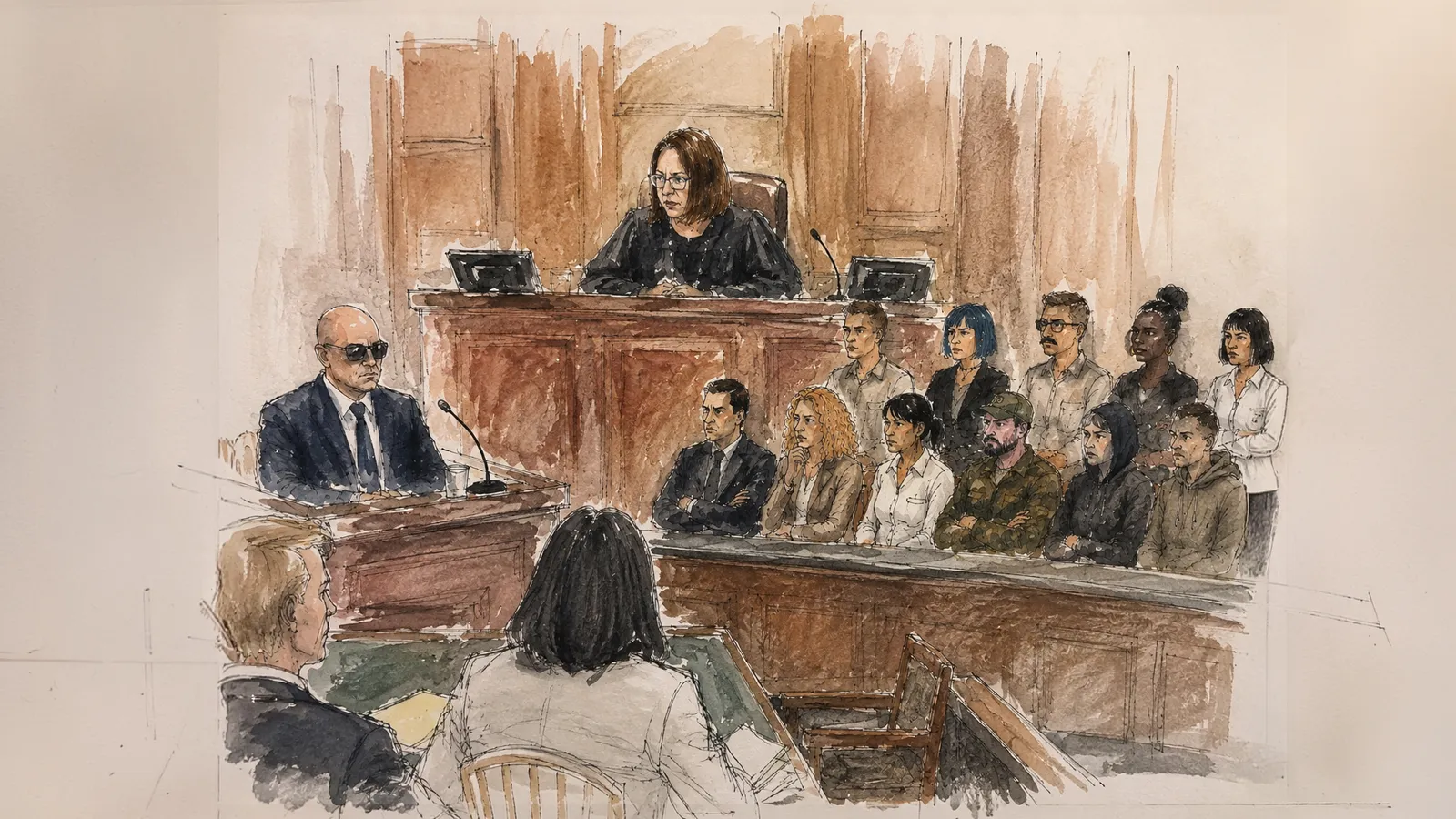
Since 1 July, the nine jurors and six supplementary jurors in Yorgen Fenech’s trial have been cut off from ordinary life. As at the time of writing, they have now spent 50 consecutive days under sequestration.
Their phones have been taken away, their access to news and the internet is restricted, and contact with family is tightly controlled.
These jurors are not being deliberately kept in miserable conditions. They have recreational facilities, a swimming pool, a gym, restaurants, books, movies, organised outings and social activities. But a four-star hotel is still not home.
How much can the state reasonably demand from an ordinary citizen in the name of justice, particularly when jury service stretches from days into months?
So are you at risk of being a juror?
(If you are incompetent, you are probably safe.)
Malta does not simply pick completely random people from the electoral register. Potential jurors must meet legal criteria including being at least 21, residing in Malta, having Maltese citizenship, having an adequate knowledge of Maltese, being of good character and being competent to serve as a juror.
Twice a year, a group including representatives of the police, judiciary, Attorney General and legal professions compiles lists of people considered eligible. Names are then drawn from those lists for jury panels.
In other words, the randomness comes after a filtering process.
Once people reach court, there is another selection process. Malta’s standard jury has nine members, a foreman and eight other jurors, and both prosecution and defence can challenge prospective jurors.
For particularly long trials, the court can appoint up to six supplementary jurors. The Fenech trial, for example, has all six. This is done for good reason, as losing a juror after two months could threaten the entire trial process.
Those six people however, will spend the same weeks isolated, yet they will probably not even participate in the final deliberations.
Are jurors always isolated?
Maltese law does not automatically require jurors to live in a hotel whenever a trial lasts more than one day. The Criminal Code allows a judge to let jurors return home if this would not prejudice the trial.
So the Fenech trial jurors’ sequestration is not simply an unavoidable feature of Malta’s jury system. It is a decision taken because of the risks surrounding this particular case.
A juror is supposed to decide a case solely on the evidence heard in court. That becomes particularly difficult in one of the most reported criminal cases in Maltese history. The law restricts jurors from communicating with outsiders about the case, and approaching a juror in an attempt to influence them is itself a criminal offence.
This is a perfectly defensible argument, given that this is exactly the sort of trial where exceptional precautions may be necessary. The more difficult question is what happens once “exceptional” means seven, eight or ten weeks.
€10 a day does not quite tell the whole story
The headline figure has understandably dominated headlines, but Malta’s juror payment system is slightly more complicated.
An employee serving on a jury is legally entitled to the necessary leave on full pay from their employer. The state then pays that juror another €10 for every day of service. Pensioners, unemployed people and housewives also receive €10 a day.
Someone who is not receiving a salary or wages from employment, such as many self-employed people, receives €30 a day for the first 15 working days and €40 thereafter.
Saying that jurors are forced to survive on €10 a day is therefore not accurate. However, a self-employed person can lose weeks of work, clients and income while their expenses continue. €30 or €40 a day does little to compensate for that loss.
Even for an employee whose salary continues, it seems a bit oversimplistic to pay exactly the same €10 allowance on day one, as on day fifty.
From an employer’s perspective, this additional large chunk of court leave can also be problematic, as the business might not have the resources to comfortably pay this added leave on top of the usual annual leave allotment.
The current rates date from 2016, when the lower rate was increased from €6.99 to €10.00.
The issue is not new. In 1993, during the trials related to the death of Nardu Debono while in police custody, Judge Victor Caruana Colombo argued that jurors deserved better financial compensation. That was the only trial in Maltese criminal history which lasted longer than the ongoing Fenech trial, so far.
More than three decades later, Malta is still having the same conversation.
Can you simply refuse?
No.
Jury service is a legal obligation, although there are exemptions.
The law allows exemption for various categories, including certain public officials, members of the police and Armed Forces, clergy, some educators and healthcare professionals, people caring for somebody suffering from a physical or mental condition and, in certain circumstances, people over 60.
Someone with a particular reason for being excused can apply to the Criminal Court, generally within four days of receiving the summons. But inconvenience alone does not give someone the right to walk away.
Once a person has actually been confirmed, the position becomes even tougher. A juror cannot simply decide after five weeks that enough is enough. The court must accept that there is a legitimate reason for that juror to be released.
How does Malta compare to other countries?
Malta’s system should be compared to countries using common-law jury systems, usually inherited from a British past.
Comparing jury payments alone, however, can be misleading. Ireland, for example, pays no separate state jury fee at all, but requires employers to continue paying workers. England and Wales compensate documented loss of earnings. Queensland pays empanelled jurors 153.30 Australian Dollars a day and increases the payment after the twentieth weekday. New Zealand has specific provisions for serious financial hardship and childcare.
Malta is unusually strict on one point: sequestration.
New Zealand explicitly describes sequestration as rare and normally allows jurors to return home, even when deliberations continue over several days. US federal courts similarly describe overnight sequestration as extremely unusual. England abandoned its old general rule requiring jurors to remain isolated during deliberations. Australia also normally allows jurors home each evening.
All of these countries face the same basic realities like Malta: smartphones, newspapers, social media and attempts to influence jurors.
However, instead of automatically isolating jurors overnight, the approach is usually to let them go home under strict rules. They must not discuss the case with anyone, research it themselves, follow reporting about it or use social media to seek or share information about the proceedings. Judges repeatedly warn jurors about these restrictions and can order stronger measures where the risk of outside influence becomes too great. In some cases, courts can also use a middle ground, keeping jurors protected and separated from the public during proceedings while still allowing them to return home at night.
Malta’s own Criminal Code is actually flexible enough to take a similar approach.
Whether it would be safe to do so in the Fenech case is another matter entirely. At the end of the day, such restrictions are quite difficult to enforce without sequestration. A trial of this sensitivity may genuinely require the jurors to remain isolated. The integrity of the verdict has to come first.
But accepting that argument actually strengthens the case for reform.
The answer is not to abolish sequestration
If the state concludes that 15 citizens must surrender months of ordinary life to ensure a fair trial, it should recognise that this is no longer ordinary jury service.
A sensible system could introduce higher payments once trials pass ten or twenty working days; compensate documented lost earnings for the self-employed up to a reasonable limit; provide support for childcare and other financial situations.
Judges could also be required to periodically reconsider whether full sequestration remains necessary. That would not mean automatically sending jurors home. In a case like Fenech’s, the answer might repeatedly remain no. But 50 days of isolation should require more active justification than five.
Psychological support should be made available without discussing the substance of the trial. A psychologist does not need to ask a juror whether they believe a witness in order to help with insomnia, anxiety, family separation or exposure to disturbing evidence. To be clear, the Court Services Agency did say that group psychological sessions were offered, although not individual counselling.
A financial imbalance
€10 a day might be understandable as a token payment for a few days of ordinary civic service while an employee continues receiving their salary. But once jury service turns into weeks of sequestration, €10 starts to look less like a token and more like an undervaluation of what the state is asking people to give up.
There is also an uncomfortable imbalance here. The judges, lawyers and other professionals involved in a major criminal trial are there in a professional capacity and are compensated accordingly. The jurors are the only people in the courtroom who have been compelled to put their ordinary life on hold.
When proceedings are prolonged by adjournments, legal arguments, scheduling problems or tactical decisions, the juror has virtually no control over the timetable but continues to bear the personal cost.
If the state is going to demand that level of sacrifice, the compensation should reflect it.
The Fenech trial may prove that extraordinary sequestration is sometimes necessary. But it has also proved that Malta has never properly designed a system for what happens when a trial lasts this long.